


Translational Science Benefits




Clinical & medical benefits (Person-involved care)
Definition
Timely access to new or improved clinical methods, devices, or ideas for all. Researchers and providers translate clinical advancements into practice for their patients. Examples include mRNA Vaccines for COVID-19, Robotic-Assisted Surgery, and Proton Therapy for Cancer.
Rationale
Clinical innovation access is a critical translational science benefit, ensuring that new or improved clinical methods, devices, and ideas are available to all populations. By bridging research discoveries and practical healthcare, it enhances patient outcomes and advances public health. Fair access is central to this process, addressing systemic barriers that exclude insufficiently catered to populations. Tailored innovations, early adoption opportunities, and standardized care protocols play a pivotal role in reducing disparities, mitigating unconscious preference, and preventing iatrogenic harm. Through these efforts, translational science fosters inclusive, effective healthcare delivery that benefits all communities.
Guidance
Advice from authors on searching for information:
To search for information on clinical innovation access, start by reviewing guidelines issued by government agencies, institutions, professional societies, and expert panels, which often reference the latest advancements. Access self-reported researcher or administrative/in-house data to gain insights into development stages and practical applications. Stay updated on FDA regulations, particularly those impacting new clinical methods and devices, and check professional association websites for relevant guidelines and recommendations. Additionally, reviewing recent literature and conducting researcher interviews can provide valuable information on the implementation and outcomes of these innovations.
Resources & Data
Organizations, repositories, websites, and other sources where you can find more information:
- Agency for Healthcare Research and Quality (AHRQ). Supports access to evidence-based clinical innovations via resources like Evidence-based Practice Centers (EPCs) and Practice-Based Research Networks (PBRNs).
- Centers for Medicare & Medicaid Services (CMS) – Innovation Center. Tests and implements models to improve access to innovative care delivery and payment strategies.
- The U.S. Food and Drug Administration (FDA) Medical Devices webpage offers detailed information on the regulation, approval, and safety monitoring of medical devices in the United States. By overseeing these processes, the FDA helps ensure that innovative clinical technologies are available to health care providers and patients. The FDA Breakthrough Devices Program is an initiative designed to expedite the development, assessment, and review of medical devices that offer more effective treatment or diagnosis of life-threatening or irreversibly debilitating conditions. It aims to facilitate quicker patient access to innovative medical devices by providing priority review and interactive communication during the development and review process.
- The World Health Organization (WHO) website provides global guidance and equity-focused programs to expand access to clinical innovation, particularly in low- and middle-income countries. The WHO Global action plan for clinical trial ecosystem strengthening outlines key areas for improving the innovation, design, conduct, and oversight of clinical trials. Notably, it aims to build sustainable, efficient, and inclusive clinical trial ecosystems that generate high-quality evidence to inform policy and practice. The WHO Innovation Hub aims to leverage digital health and innovative solutions to improve global health outcomes.
- PCORnet (Patient-Centered Outcomes Research Network). A national research network designed to conduct rapid-cycle studies that move clinical innovations into real-world settings.
- Patient-Centered Outcomes Research Institute (PCORI). Funds patient-focused comparative effectiveness research and implementation studies to improve access to clinical innovation.
- NIH RePORTER. Searchable database of funded NIH research, including clinical innovation and translational access projects.
- Canadian Agency for Drugs and Technologies in Health (CADTH). Provides health technology assessments and implementation guidance across Canada.
- National Institute for Health and Care Excellence (NICE). Develops evidence-based guidance and pathways to ensure clinical innovation adoption in the UK.
- Commonwealth Fund – Delivery System Reform. Researches and promotes health system innovations that improve equity, quality, and access.
Data Limitations
Challenges you may encounter while searching for information:
Clinical innovation access may be difficult to track because innovations can range from simple process improvements to complex technologies, often without standardized reporting, and the labor required to design and conduct trials impacts timelines.
Publications
Articles, books, and other publications in translational science using the benefit:
- Siripurapu S, Darimireddy NK, Chehri A, B. S, A.V. P. Technological Advancements and Elucidation Gadgets for Healthcare Applications: An Exhaustive Methodological Review-Part-II (Robotics, Drones, 3D-Printing, Internet of Things, Virtual/Augmented and Mixed Reality). Electronics. 2023; 12(3):548.
- Shen H, Liu H. Progress in clinical application of computer-assisted orthopedic surgery. Digital Medicine. 2023 Jun; 9(2):e00002. doi: 10.1097/DM-2023-00002.
- Royle JK, Hughes A, Stephenson L, Landers D. Technology clinical trials: Turning innovation into patient benefit. Digit Health. 2021;7:20552076211012131.
- Chatterjee S, Das S, Ganguly K, Mandal D. Advancements in robotic surgery: innovations, challenges and future prospects. J Robot Surg. 2024;18(1):28. doi:10.1007/s11701-023-01801-w.
- Mahara G, Tian C, Xu X, Wang W. Revolutionising health care: Exploring the latest advances in medical sciences. J Glob Health. 2023;13:03042. doi:10.7189/jogh.13.03042.
- Rutten LJF, Ridgeway JL, Griffin JM. Advancing translation of clinical research into practice and population health impact through implementation science. 2024 Apr; 99(4):665-676. doi: 10.1016/j.mayocp.2023.02.005.
- Mayrink NNV, Alcoforado L, Chioro A, Fernandes F, Lima TS, Camargo EB, Valentim RAM. Translational research in health technologies: A scoping review. Front Digit Health. 2022 Aug 3;4:957367. doi: 10.3389/fdgth.2022.957367.
Case Studies

From Isolation to Connection: Enhancing Quality of Life after Brain Injury
Reducing social isolation and strengthening support relationships for people with brain injury (ICTS-supported KL2 scholar)
Clinical & medical benefits
Community & public health benefits

Proyecto Adelante: Fortaleciendo la salud mental de personas que viven con VIH en Puerto Rico
Proporcionar apoyo de salud mental culturalmente apropiado para adolescentes y adultos jóvenes que viven con VIH en Puerto Rico
Clinical & medical benefits
Community & public health benefits
Economic benefits
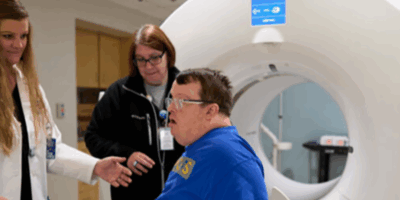
Increasing Research Access for People with Down Syndrome
Eliminate clinical trial barriers for people with Down syndrome by replacing neuroimaging with blood-based biomarkers (ICTS-supported KL2 scholar)
Clinical & medical benefits
Community & public health benefits
Economic benefits